Designed for healthcare professionals creating clear and structured medical presentations.Ideal for doctors, medical educators, and pharmaceutical teams preparing lectures, clinical education, product presentations, and training.Fully editable in PowerPoint, allowing you to customize diagrams, charts, and slide layouts with your own medical contentReady-to-use presentation structure that saves time and helps you build professional healthcare presentations quickly.
Customizable colors and shapes allow you to easily adapt each slide to your content and presentation style—simply drag and drop your material for a quick update.
Integrated animations enhance the clarity of your presentation, helping simplify complex concepts and communicate them more effectively
Specifically designed for life sciences , aligning with the unique needs of pharmaceutical, biotech, and healthcare organizations, enabling clear, compliant, and impactful communication.

Our team has deep experience in life sciences, having created thousands of presentations for pharmaceutical, medical device, biotech, and healthcare organizations across multiple functions and levels.
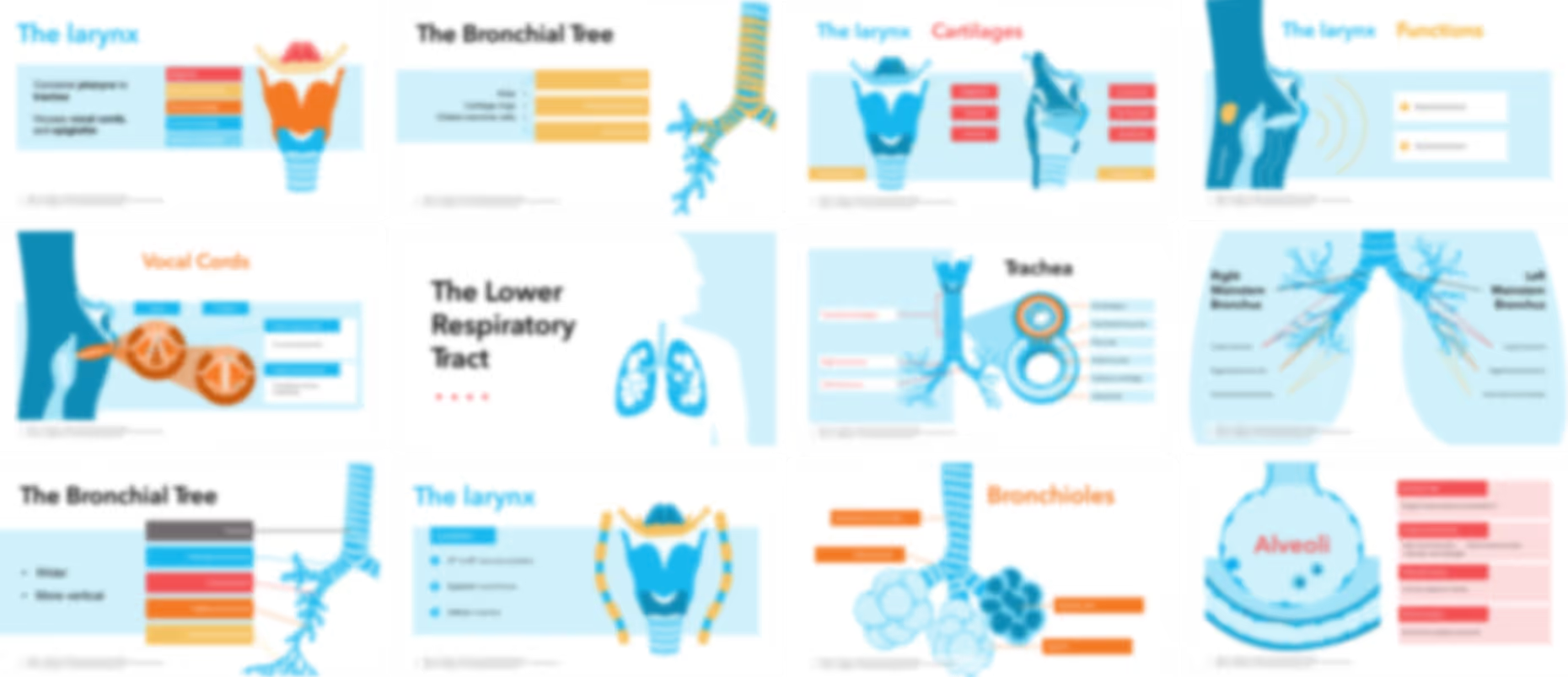
This slide introduces the larynx, a crucial structure commonly known as the voice box, marking a new section in the presentation. It provides an immediate overview of its primary function: connecting the pharynx to the trachea. The slide also highlights the key components it houses, including the vocal cords and the epiglottis, all supported by a clear, labeled anatomical diagram that identifies the major cartilages, offering a solid foundation for understanding this organ.
This slide provides crucial anatomical context by detailing the exact location of the larynx within the neck. It uses a clear, numbered list to pinpoint its position relative to the cervical vertebrae (C3 to C6) and its connections to the hyoid bone superiorly and the trachea inferiorly. This information is fundamental to understanding the larynx's role as a passageway and its relationship to surrounding structures.
This slide provides a comprehensive anatomical breakdown of the cartilaginous framework of the larynx. It features both an anterior and a lateral view of the larynx, allowing for a complete three-dimensional understanding. The diagrams are clearly labeled to identify all major cartilages, including the epiglottis, thyroid, cricoid, cuneiform, corniculate, and arytenoid cartilages, making a complex anatomical structure easy to visualize and comprehend.
This slide succinctly details the two primary functions of the larynx. It uses numbered points and a clear, dynamic diagram to illustrate how the larynx acts as a critical passageway that routes food and air into their correct respective tracts. It also introduces the larynx's role in voice production, offering a concise yet comprehensive overview of the organ's essential physiological duties.
This slide provides a detailed look at the anatomy and function of the vocal cords, a core component of the larynx. It clearly differentiates between the true vocal cords, which are responsible for sound production, and the false vocal cords, which function to close the glottis during swallowing. The slide's side-by-side diagrams visually illustrate the "open" and "closed" states of the vocal cords, offering a clear and dynamic understanding of how they perform their distinct roles in both speech and protecting the airway.
This slide serves as a clear transition to a new major section of the presentation, introducing the Lower Respiratory Tract. The visual on the slide immediately orients the viewer, showing a high-level overview of the lungs, bronchi, and bronchioles. This powerful introductory slide sets the stage for a detailed anatomical and functional exploration of the respiratory system below the larynx.
This slide provides a comprehensive view of the trachea, detailing both its overall structure and microscopic anatomy. It features an anatomical diagram showing the trachea's division into the right and left bronchus, along with a detailed cross-section of the tracheal wall. This cross-section clearly labels the layers, including the mucosa, submucosa, and hyaline cartilage, offering an in-depth look at this vital airway.
This slide provides a detailed and organized overview of the bronchial tree, the complex network of airways within the lungs. The clear, anatomical diagram visually breaks down the hierarchy of the airways, labeling the Right and Left Mainstem Bronchus, the Lobar bronchi, the Segmental bronchi, and the Terminal bronchioles. This slide is essential for understanding how air is efficiently distributed throughout the lungs.
This slide provides a more detailed look at the anatomy of the mainstem bronchus. It clearly highlights the key characteristic that the right mainstem bronchus is wider and more vertical than the left, a crucial anatomical detail for clinical applications. This focus on specific details demonstrates the presentation's depth, moving beyond a simple overview to provide essential, practical knowledge.
This slide provides a detailed look at the structural components of the upper bronchial tree. It highlights key features of the mainstem bronchus, including its wide diameter, the presence of cartilage rings for structural support, and the lining of ciliated columnar cells, which are essential for clearing debris from the airways. This focus on both macroscopic and microscopic detail provides a comprehensive understanding of the anatomy.
This slide marks a crucial transition in the presentation, moving into the final and most critical structures of the respiratory tree. It provides a detailed diagram that illustrates the progression from the respiratory bronchiole to the alveolar ducts, sacs, and alveoli. This section is essential for understanding where the vital process of gas exchange takes place.
This slide provides a micro-anatomical deep dive into the alveoli, the primary functional units of the lungs. It details the cellular composition of the alveolar wall with a focus on its single simple squamous epithelium, and identifies the different cell types crucial for function: Type I and Type II pneumocytes and alveolar macrophages. The slide also explains the purpose of alveolar pores and highlights the vital blood supply from the pulmonary capillary networks, offering a complete picture of gas exchange at the cellular level.
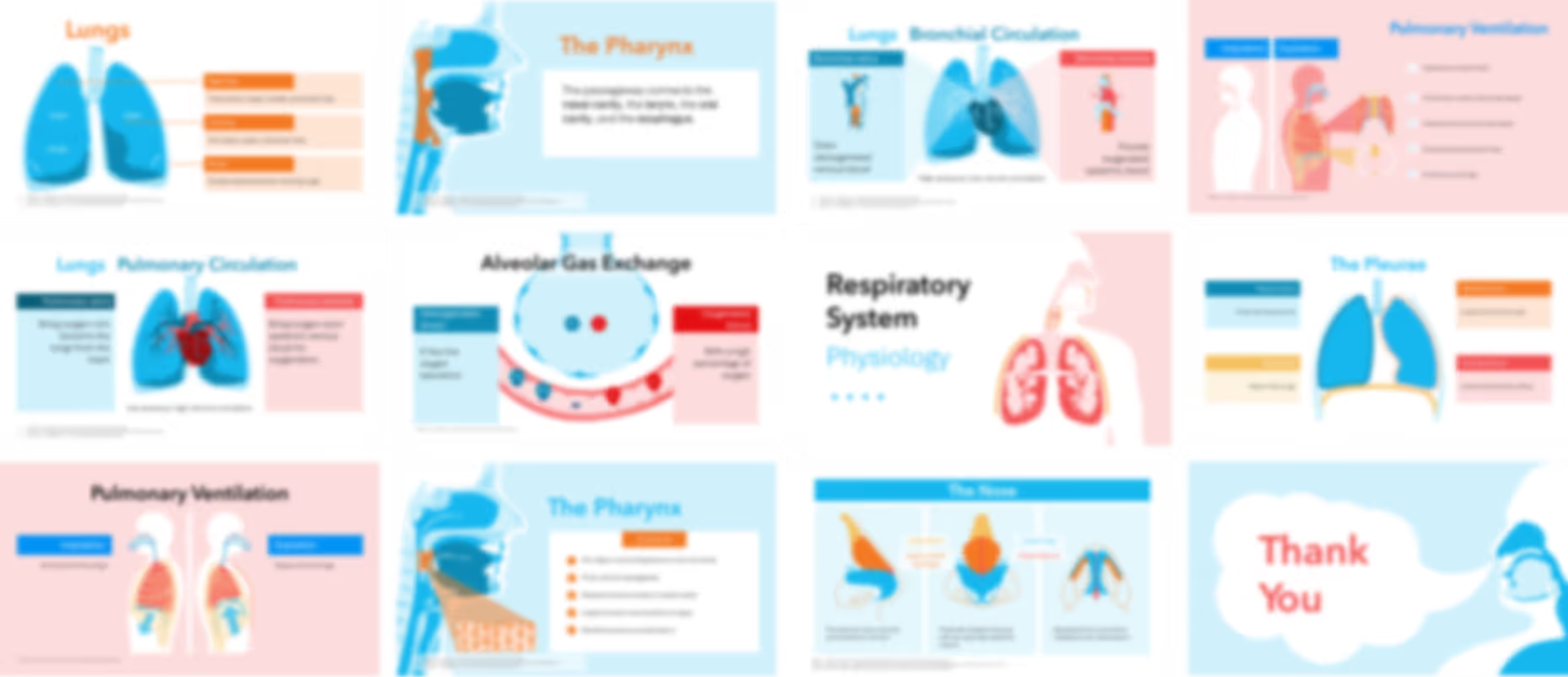
This slide provides an essential overview of the lungs' gross anatomy. It uses a clear, color-coded diagram to visually distinguish the right lung with its three lobes and the left lung with its two lobes. The slide also concisely defines the pleura as the double-layered serosa covering the lungs, offering a complete picture of the external structure and protective coverings.
This slide provides an essential overview of the pulmonary circulation, illustrating how the lungs are integrated with the cardiovascular system. It clearly distinguishes the functions of the pulmonary arteries that carry oxygen-poor blood to the lungs from the pulmonary veins that return oxygen-rich blood to the heart. This segment is vital for understanding the complete process of gas exchange and reinforces the interconnectedness of the body's systems.
This slide distinguishes the bronchial circulation from the pulmonary system, providing critical detail on how the lung tissue itself is supplied with blood. It clearly explains that bronchial arteries provide oxygenated blood directly to the lungs' structures, while bronchial veins drain the deoxygenated blood. This distinction highlights the presentation's comprehensive coverage of both the functional and nutritional blood supplies of the respiratory system.
This slide provides a focused look at the pleural membranes and their role in lung function. It clearly differentiates between the visceral pleura, which covers the external surface of the lungs, and the parietal pleura, which lines the thoracic wall. The slide also explains the purpose of the pleural cavity and the fluid it contains, offering a complete picture of the protective layers and the mechanics of breathing.
This slide marks a significant transition, serving as an introductory slide to a new section focused on respiratory system physiology. It signals a shift from the anatomical structures to a detailed exploration of how the system functions. This slide sets the stage for a deep dive into the mechanics of breathing, gas exchange, and the regulation of respiration.
This slide initiates the physiology section by explaining the fundamental mechanics of pulmonary ventilation, or breathing. It uses a clear, side-by-side diagram to illustrate the processes of both inspiration and expiration, showing how the movement of the diaphragm and thoracic wall facilitates the flow of air into and out of the lungs. This visual explanation simplifies a complex physiological process.
This slide provides a step-by-step breakdown of the process of inspiration. It uses a clear, numbered list alongside an illustrative diagram to explain the sequence of events, from the contraction of the inspiratory muscles and the subsequent increase in thoracic cavity volume to the drop in intrapulmonary pressure that ultimately draws air into the lungs. This detailed, sequential approach clarifies the physical principles behind breathing.
This slide provides a detailed, step-by-step explanation of the process of expiration. It uses a numbered list to clarify the sequence of events, beginning with the relaxation of the inspiratory muscles and the subsequent decrease in thoracic cavity volume. This leads to a rise in intrapulmonary pressure that ultimately forces air out of the lungs, effectively completing the discussion on the mechanics of breathing.
This slide provides a clear visual explanation of alveolar gas exchange, the vital process occurring in the lungs. It uses a detailed diagram to illustrate how deoxygenated blood, with its low oxygen saturation, releases carbon dioxide and takes up oxygen as it passes by the alveoli, becoming oxygenated blood. This dynamic slide effectively demonstrates the key physiological event that the entire respiratory system is built to perform.
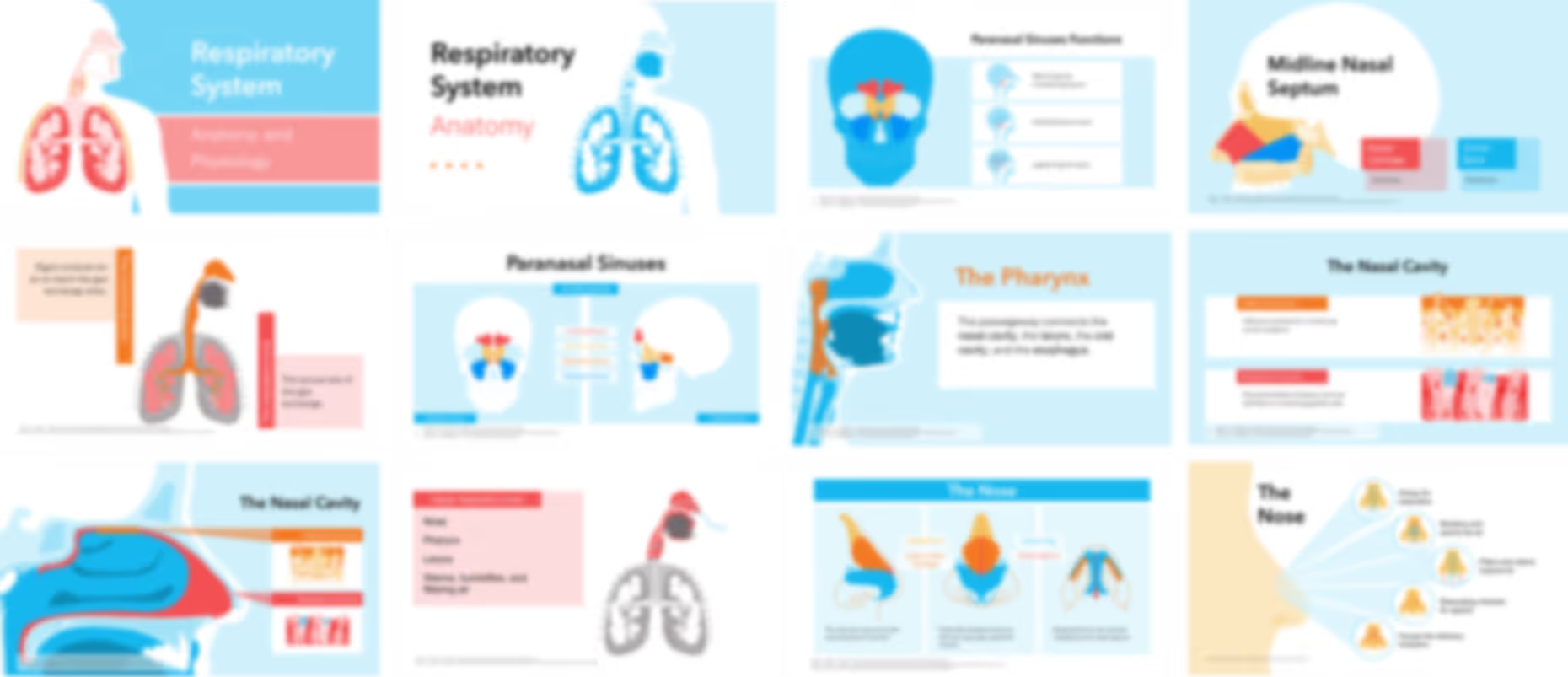
This presentation offers a complete and visually rich exploration of the respiratory system, from the initial anatomy of the nasal cavity and pharynx to the complex physiology of the lungs. Its comprehensive approach, which includes detailed breakdowns of structures, step-by-step explanations of processes like pulmonary ventilation and gas exchange, and high-quality diagrams, makes it an invaluable educational tool for a wide range of audiences. The presentation effectively transitions between macro- and micro-level anatomy and physiology, providing a holistic understanding of how the respiratory system functions.